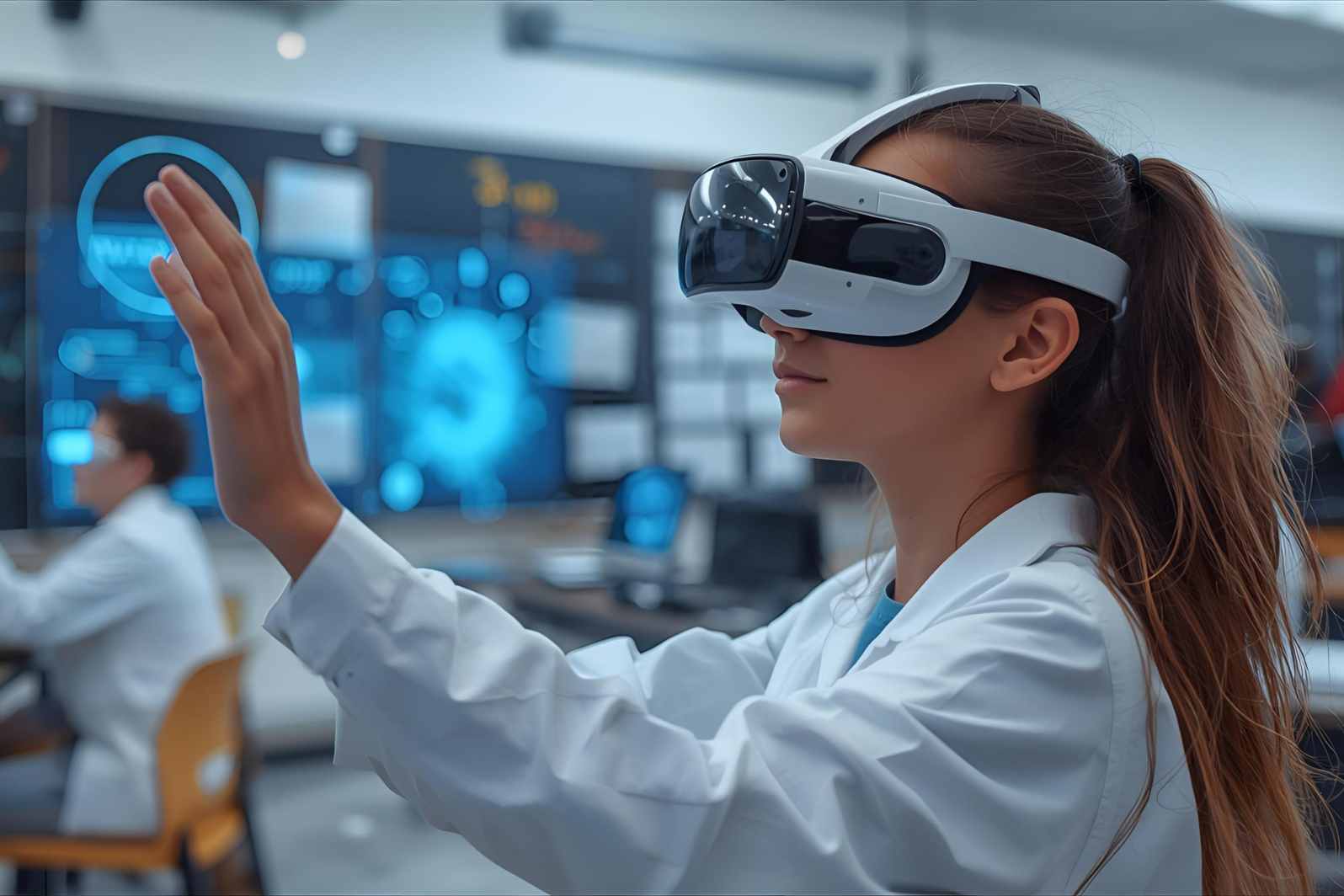
As has always been the case, education changes with technology. From chalkboards to smartboards, every new tool has impacted the way students learn. Today, with the advent of Augmented Reality (AR), learning also has become more interactive, fun and effective. AR places digital information over the real world and enables students to see lessons animated right in front of them. This mix of the real and virtual is the future of learning.
What is AR in Education?
In education, AR is the gateway to overlaying 3D images, videos or animations on top of any physical objects using a phone, tablet or AR glasses. When students scan an image in a textbook with an augmented reality app, for example, a 3D version of the subject depicted can pop up. This makes it easier for students to view and comprehend complex subjects.
Benefits of AR in Learning
1. Makes Learning Fun
AR turns dry lessons into engaging experiences. Rather than reading about planets, students can look at a 3D solar system and zoom into each planet.
2. Improves Understanding
Some things are hard to picture, like the human heart or chemical reactions. AR offers students a way to view them in 3D, and we’re left with the well-lit subject.
3. Encourages Active Learning
Students aren’t tutored in sitting down and listening. They mess around in AR tools and they walk around and discover. This keeps their attention longer.
4. Bridging the Distance Between Theory and Practice
AR links concepts taught in the classroom with real life applications. For engineering students, for instance, 3D models of machines are now just a click away and users can see how they work.
5. Supports All Learners
Not all students learn the same way. AR can assist visual learners, slow learners and even special needs students by providing lessons in various formats.
Examples of AR in the Classroom
- Medical Studies: Participate in 3D anatomy models and surgical practice without any risk of bodily harm.
- History Classes: Ancient monumental structures can be brought to life so that students can study past civilizations.
- Language learning: AR flashcards can help kids learn new words through interacting images.
- Science Labs: Students are able to conduct virtual experiments – no need for safety goggles on this one.
Problems of and in Using AR for Education
AR has a lot to offer but there are challenges:
- Cost: AR devices and apps can be costly for schools.
- Training: Teachers have to be adequately trained in order to use AR.
- Access: Some students do not have smart phones or tablets to facilitate AR.
The Future of AR in Learning
AR will soon be as common in the classroom as any other low-tech tool. It is not a replacement for teachers, but rather can support them in creating better learning. With AR, students can move outside textbooks to see and feel knowledge in tangible and interesting ways.
FAQs:
Q1: What are the differences between AR and VR when using them in educational context?
AR adds digital elements to the real world, while VR creates a completely virtual environment. AR is easier to use in classrooms because it only needs a smartphone or tablet.
Q2: Is AR for all age of people?
Yes, AR can be used for young children, students at school level, even college students. The material may be varied by age and subject.
Q3: Do students require specific devices for learning through AR?
Simple AR apps can work on smartphones or tablets. Immersive AR may require AR glasses or it may not.
Q4: Will teachers be replaced by AR in the future?
No, AR is a support tool. Teachers are still required to lead, explain and support students.
Q5: Which topics are the most suited absorbed for AR?
Science, history, geography and medical studies stand to gain most from the technology, but AR can be applied to almost any subject.