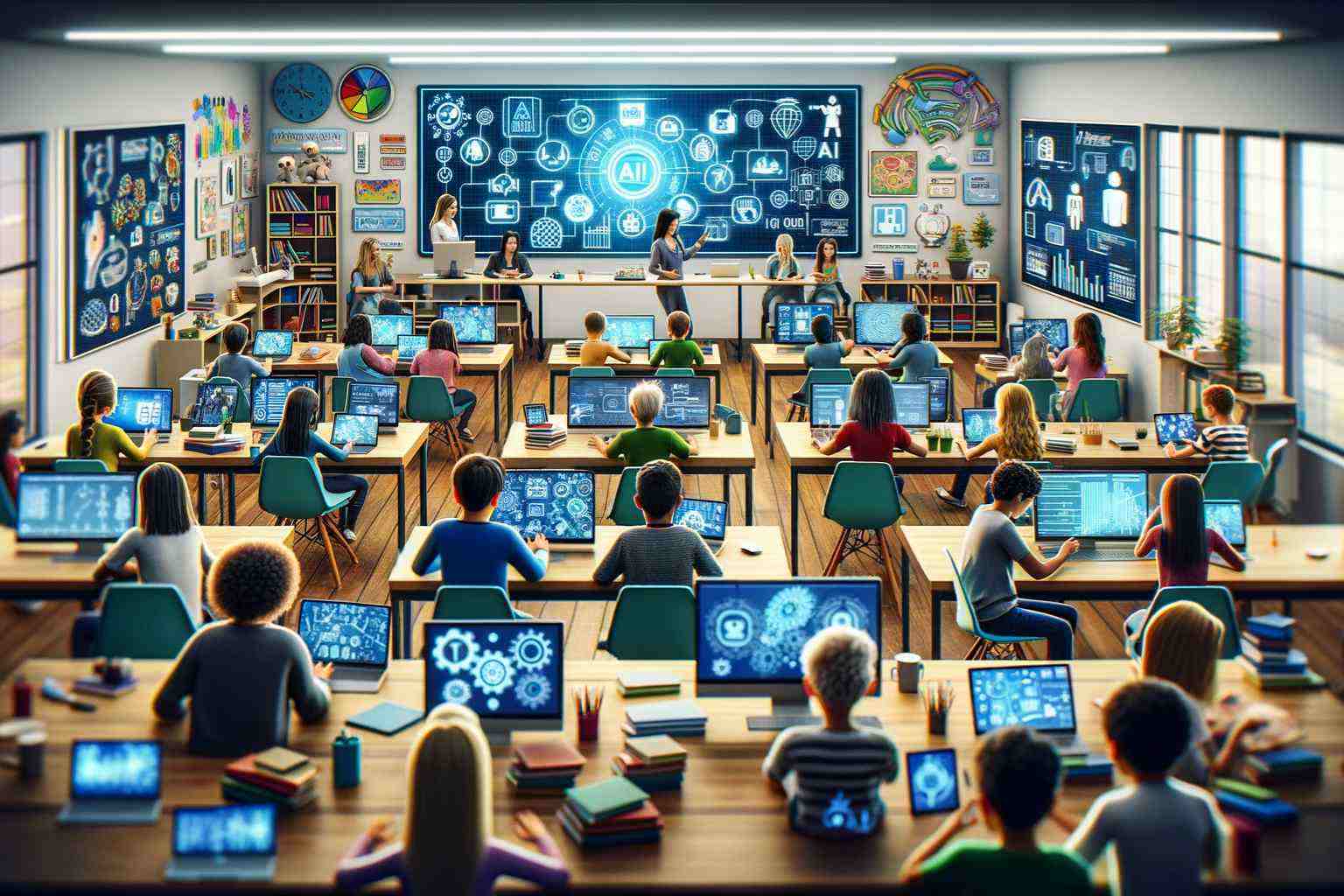
AI is transforming education by enabling smart, efficient and personalized learning for students. With conventional teaching methods, students in the same classroom are often taught the same thing, at the same pace, and by some arbitrary date be expected to learn it. With AI tools, each student can experience a learning path tailored to his or her own speed and capacity. Fast forward to 2025 and AI is one of the most effective assistants for teachers and a robust guide for students as they start education in digital or hybrid classrooms.
1. What AI Looks Like in a Modern Classroom
Classroom AI is a term used to refer to tools, programs and software powered by data and automation that help with teaching. It watches how students react to lessons, monitors their progress, and guides teachers toward better ways of explaining topics. These are tools that can pinpoint where we’re confused or disconnected, recommend resources to learn on our own and coordinate tasks that normally take a lot of time.
For example, AI powered applications can suggest practice questions to improve weak areas, smart dashboards can help teachers track overall class performance. Learning is thus more systematized and efficient for all parties.
2. Personalized Learning for Every Student
Every student learns differently. Some students catch on, others need time and extra help. AI reads these patterns and modifies lessons to reflect. If a student is struggling with a topic, the A.I. tool offers more explanations, easier videos or extra practice problems. If it senses a student is grasping concepts before they’ve even been presented, it provides advanced questions to challenge them.
This customized path to learning enables students to blossom at their own rate rather than strut or be bored. It also makes them more confident, because they are getting exactly the type of support they need.
3. AI Eases a Teacher’s Task to Teach
Teachers face numerous day-to-day responsibilities which include, but are not limited to, grading papers, writing notes and observing attendance or classroom diversity. AI takes a lot of that off our plate. Computers can grade with ease not just multiple choice questions, but assignments and even essays. AI can also generate summaries, worksheets and quiz questions in a matter of seconds.
It takes the burden off teachers and staff, and gets out-of-classroom help for collapsing student devices and center classes. It is also stress reducing, particularly in large classes.
4. Instant Feedback Improves Understanding
Students learn more when they can receive instant feedback. AI tools make mistakes immediately obvious and offer step by step solutions. This helps students immediately fix their mistakes, rather than repeating them.
For example, math apps driven by A.I. can reveal where the student engaged in incorrect calculations, while reading apps can point out challenging words. This immediate response accelerates learning and provides better understanding of the subject matter.
5. Why Artificial Intelligence Is Growing So Quickly in Education
The following are some of the key reasons why AI is being adopted so widely in educational institutions:
- More availability of smartphones, tablets and laptops
- Low-cost learning apps for schools and students
- Engaging activities that capture students interests
- Smart classrooms becoming more common
- Technological champions in the class room
The points above explain why AI is revolutionizing modern learning.
6. AI Makes Learning More Engaging
Tools powered by AI incorporate animations, videos, gamified quizzes and interactive exercises to make learning exciting. Students willingly engage with the material because it is like playing a game or reading a story and not just staring at another bland wall of text. It also helps decrease boredom, enhance focus and even promote better classroom participation.
Empowering kids through interactive AI based tools also incentivize them to earn badges, scores and rewards, thereby nudging more practice and skills enhancement.
7. Technologies That Power AI Learning
There are several technologies that support AI in education:
- Machine learning
- Speech recognition
- Chatbots and virtual tutors
- Data analytics
- Natural language processing
Machine learning assists AI in interpreting a student’s pattern of learning. Language learning apps that can recognize speech are able to enable reading with Audio output. Virtual tutors respond to doubts in real time, and data analytics help teachers get insights into class performance. And these technologies work hand-in-hand to make learning seamless and intuitive.
8. Barriers to the Deployment of AI in Schools
Though it has many advantages, schools will have to confront challenges as AI moves forward. The major issues include:
- Devices cause a high price per student
- Relatively weak internet in some areas
- Importance of teacher training in AI tools
- Risk of students depending on technology too much
9. AI’s role in supporting various learning styles
Students have different learning styles. Some people like to learn by images, others through listening and some hands on. AI facilitates all types of learning through:
- Videos for visual learners
- Audio explanations for auditory learners
- Interactive simulations for practical learners
It also allows students to repeat lessons as many times as they want. Fast learners can explore advanced content, while others can slow down without feeling pressured. This flexibility creates a supportive learning environment for all.
10. AI in Classrooms: What the Future Holds
AI in education has a bright future ahead. The classroom of the future will be a hybrid, bringing digital and traditional teaching into effective alignment. An AI will curate personalized study plans, track progress in real time, and suggest areas of weakness intelligently.
AI will go into every school, even those in small towns, as technology gets cheaper. It will create more equal opportunity in education, providing all students with access to high-quality learning resources. The classroom of the future will be interactive, data driven and devoted to enabling every student to do his or her best.
Key Takeaways
- ‘AI personalizes lessons for every student’
- Time saver for the teachers with things automated
- The students receive immediate feedback, which fosters deeper learning
- Interactive AI tools that make learning more fun and engaging.
- AI powered learning will be the future of education
FAQs:
Q1. What is AI in the classroom?
AI comes with smart tools that help teachers teach better and students learn in an easy way.
Q2. How does AI help students?
It offers personalized lessons, instant feedback and interactive learning assistance.
Q3. Does AI replace teachers?
No, A.I. supplements teachers but it can’t replace them.
Q4. What’s so hard about teaching AI to learn?
Schools contend with problems like device costs, training requirements and internet issues.
Q5. Does artificial intelligence belong in schools – or at least be more prevalent?
Yes, schools will use AI more and more as technology becomes cheaper and less clunky.